
About
Languages:

Explore Our Services
Preview Our Rates
Access all your mortgage options with just one application. Preview today's rates first:

Blog
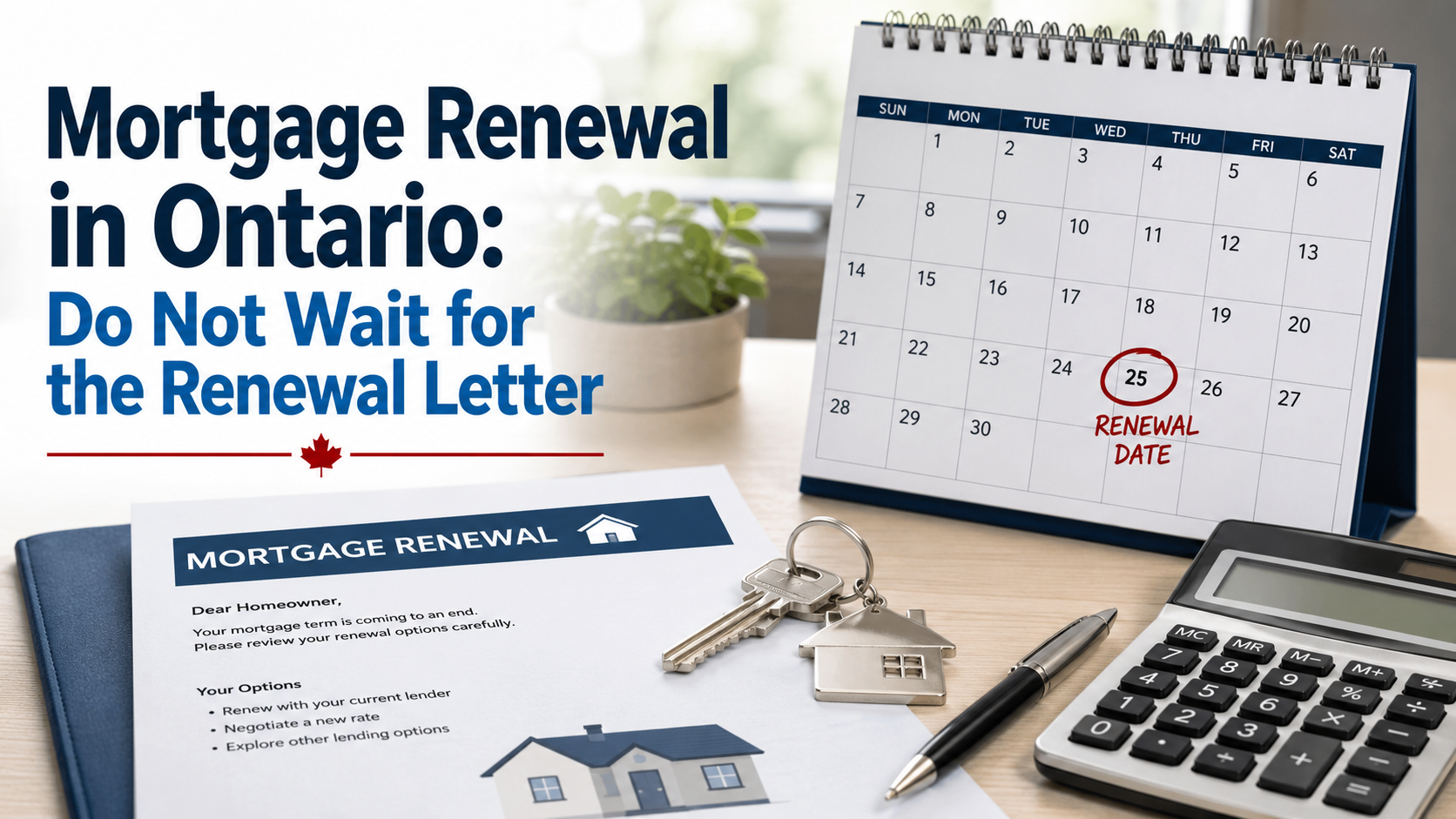
Mortgage Renewal Ontario: A Step-by-Step Plan
July 11, 2026
Mortgage Renewal Ontario: How to Prepare Before Your Term Ends
A mortgage renewal in Ontario should not begin when your lender’s letter arrives. By that point, you may have only a few weeks to compare rates, review your budget and decide whether staying with your current lender still makes sense.
Many homeowners treat renewal like simple paperwork. They receive an offer, sign it and move on.
But that one signature could affect your monthly payment and the amount of interest you pay for several years.
Your renewal is an opportunity to review your mortgage, compare lenders and make sure the next mortgage term still fits your life.
What Is a Mortgage Renewal?
A mortgage normally has two different timelines:
- The amortization is the total amount of time planned to repay the mortgage.
- The term is the length of your current mortgage agreement.
For example, you may have a 25-year amortization but a five-year mortgage term.
When the five-year term ends, the remaining mortgage balance does not disappear. You must renew the mortgage for another term unless you repay the balance in full.
During a mortgage renewal, you usually have three main choices:
- Accept the offer from your current lender.
- Negotiate with your current lender.
- Transfer the mortgage to another lender.
The Financial Consumer Agency of Canada confirms that homeowners are not required to renew with their existing lender and recommends shopping around several months before the term ends.
Why You Should Not Automatically Sign the Renewal Letter
Your current lender already has your mortgage.
That makes renewal easy for them. They may expect that you will choose convenience instead of comparing other options.
The first offer may not necessarily provide the best:
- Interest rate
- Prepayment privileges
- Mortgage term
- Penalty structure
- Portability
- Payment flexibility
Even a small rate difference can affect your payment and total interest cost.
The lowest advertised rate is not automatically the best mortgage either. A mortgage with a slightly higher rate may offer better prepayment privileges, lower penalties or more useful flexibility.
The goal is not simply to find the lowest number. The goal is to find a mortgage that fits your financial plans.
When Should You Start Planning Your Mortgage Renewal?
Start preparing approximately four to six months before your renewal date.
You do not need to wait for your lender’s renewal notice.
Starting early gives you time to:
- Review your current mortgage
- Estimate your new payment
- Compare lenders
- Organize income documents
- Review your credit
- Pay down expensive debt
- Discuss possible rate-hold options
- Decide whether you may sell or move
Your lender must provide renewal information at least 21 days before the end of the mortgage term. However, 21 days may not provide enough time to carefully compare your options.
Six months before renewal
Review your current mortgage contract and determine:
- Your renewal date
- Your remaining balance
- Your remaining amortization
- Your current interest rate
- Your payment frequency
- Your prepayment privileges
- Whether the mortgage is registered as a standard or collateral charge
Four months before renewal
Begin comparing possible mortgage terms and lenders.
Ask whether an early rate hold is available. The exact rate-hold period depends on the lender and mortgage product.
Two months before renewal
Narrow down your options and prepare the required documents.
Do not wait until the final week. A lender change may require an application, document review, appraisal, legal work or mortgage discharge.
How Much Could Your Mortgage Payment Change?
Consider a homeowner with:
- A remaining mortgage balance of $400,000
- 20 years remaining on the amortization
- A current rate of 2.49%
- A possible renewal rate of 4.49%
The approximate monthly payment at 2.49% would be:
$2,115 per month
At 4.49%, the approximate payment would become:
$2,520 per month
That is an increase of approximately:
$405 per month
Over one year, the household would need approximately:
$4,860 more in its budget
This is only an illustration. Actual payments depend on the mortgage balance, interest rate, amortization, payment frequency and lender calculations.
The Bank of Canada reported that some borrowers renewing mortgages in 2026 may still experience payment increases, particularly those leaving lower fixed rates obtained during the pandemic period.
This is why renewal planning should begin before the new payment becomes a surprise.
Seven Steps to Prepare for a Mortgage Renewal in Ontario
1. Review your household budget
Start by looking at what has changed since your last mortgage term began.
Ask yourself:
- Has my household income increased or decreased?
- Have my property taxes increased?
- Am I paying for childcare now?
- Do I have car loans or credit card balances?
- Am I planning renovations?
- Could I manage a higher mortgage payment?
- Do I expect to move during the next term?
A mortgage that worked five years ago may not be the best option today.
2. Estimate your possible new payment
Do not compare interest rates without looking at the payment.
Calculate your payment using different possible rates, such as:
- Your current rate
- One percentage point above your current rate
- Two percentage points above your current rate
- The actual renewal options currently available
The Government of Canada mortgage calculator can help homeowners estimate mortgage payments and compare the effect of prepayments.
Once you know the possible payment, practise living with it before renewal.
For example, if your expected payment may increase by $400 per month, begin setting aside that additional $400. This shows whether the new payment is realistic and helps build emergency savings.
3. Check your credit and debts
Your current lender may offer a simple renewal without requesting a completely new application.
However, transferring to another lender normally requires approval.
The new lender may review:
- Income
- Employment
- Credit history
- Property details
- Mortgage payment history
- Other monthly debts
Before renewal:
- Pay every bill on time
- Avoid missing minimum payments
- Reduce high credit card balances
- Avoid unnecessary new credit applications
- Review your credit report for incorrect information
Do not close old credit accounts or make major changes without first understanding how they may affect your credit profile.
4. Compare more than the interest rate
When comparing renewal offers, review the complete mortgage.
Important questions include:
- Is the rate fixed or variable?
- How long is the term?
- What happens if I sell the home?
- Can I transfer the mortgage to another property?
- How are penalties calculated?
- Can I increase my regular payment?
- How much can I pay as a lump sum?
- Is the mortgage registered as a collateral charge?
- Does the mortgage include restrictive conditions?
A low rate can become expensive if the mortgage has a large penalty or does not provide the flexibility you need.
5. Decide whether you need a renewal or refinance
A renewal generally continues the existing mortgage balance into a new term.
A refinance changes more than the basic term or rate. You may refinance to:
- Increase the mortgage amount
- Access home equity
- Consolidate higher-interest debt
- Pay for renovations
- Add or remove a borrower
- Change the amortization
- Restructure your finances
Refinancing may involve qualification requirements, appraisal costs and legal expenses.
Do not combine debt into a mortgage only because the new monthly payment looks lower. Moving short-term debt into a long amortization can increase the total interest paid if there is no repayment plan.
6. Ask your current lender to improve its offer
You do not have to accept the first renewal rate.
Before negotiating, obtain information about competing options. Then ask your existing lender whether it can improve:
- The interest rate
- The term
- Prepayment privileges
- Payment flexibility
- Other mortgage conditions
Compare written offers whenever possible.
A lower payment should also be examined carefully. It may result from extending the amortization, which can reduce the payment but increase the length of time you remain in debt.
7. Review the final mortgage documents
Before signing, verify:
- The interest rate
- The term length
- The payment amount
- The payment frequency
- The amortization
- Prepayment privileges
- Penalty terms
- Portability
- Renewal conditions
- Any lender fees
Ask questions about anything you do not understand.
A mortgage is a legal financial agreement. Do not rely only on a verbal explanation.
Can You Switch Lenders at Renewal?
Yes. You may apply to transfer your mortgage to another lender when your term ends.
However, the new lender must approve the application.
Switching lenders may involve:
- Mortgage discharge fees
- Registration or transfer fees
- Appraisal costs
- Legal expenses
- Administration fees
Some lenders may cover certain transfer costs, but this varies by lender and product. The Financial Consumer Agency of Canada recommends confirming all switching costs and asking whether the new lender will cover any of them.
What about the mortgage stress test?
OSFI does not expect federally regulated lenders to apply the prescribed minimum qualifying rate to certain uninsured straight switches.
A straight switch generally means:
- The mortgage is transferred between federally regulated lenders
- The mortgage amount does not increase
- The amortization does not increase
The new lender still reviews and approves the application using its own lending criteria. The exemption does not mean that every borrower or property will automatically qualify.
Refinancing, increasing the mortgage or extending the amortization may be treated differently.
Should You Make a Lump-Sum Payment Before Renewal?
A lump-sum payment can reduce the balance that must be renewed.
For example, suppose your remaining balance is $400,000 and you apply a permitted $20,000 lump-sum payment.
You would renew approximately $380,000 instead of $400,000.
That may:
- Reduce the new payment
- Reduce future interest
- Help repay the mortgage sooner
Before making a large payment, confirm your prepayment privileges and keep enough savings for emergencies.
Do not use every available dollar to reduce the mortgage if doing so would leave your family without a financial cushion.
Should You Choose a Fixed or Variable Rate?
There is no single correct answer for every homeowner.
A fixed rate may make sense when:
- You want predictable payments
- Your budget has limited room for increases
- Payment stability is more important than possible future savings
A variable rate may make sense when:
- You understand that rates and payments may change
- Your budget can manage fluctuations
- You are comfortable accepting uncertainty
Your decision should be based on your finances, risk tolerance and future plans, not only on a prediction about where rates may go.
No one can guarantee what interest rates will do during your next mortgage term.
Common Mortgage Renewal Mistakes
Waiting for the renewal letter
The lender’s letter may arrive too late for a careful comparison.
Focusing only on the lowest rate
Penalties, privileges and restrictions also matter.
Extending the amortization without reviewing the cost
A lower payment can result in more years of payments and more total interest.
Moving debt into the mortgage without a repayment plan
Debt consolidation can improve monthly cash flow, but it does not solve overspending by itself.
Taking on new debt before applying to switch
A new vehicle loan or large credit card balance could affect qualification.
Assuming your current lender has offered its best rate
The first offer may be negotiable.
Choosing a term based only on rate predictions
The mortgage term should also match your expected plans for the property.
A Simple Mortgage Renewal Checklist
Use this checklist before signing your next mortgage:
- Confirm the exact renewal date
- Check the remaining mortgage balance
- Confirm the remaining amortization
- Estimate the payment at different rates
- Review your household budget
- Check your credit report
- Reduce expensive debt where practical
- Compare fixed and variable options
- Compare different term lengths
- Review prepayment privileges
- Review penalty calculations
- Ask about portability
- Check whether the mortgage has a collateral charge
- Compare your lender’s offer with other options
- Calculate switching or refinancing costs
- Read the final documents before signing
Final Thoughts
A mortgage renewal in Ontario is not just an administrative task. It is a financial decision that can affect your monthly budget, future plans and total borrowing cost.
Start several months before your term ends. Review your finances, estimate the new payment and compare the complete mortgage rather than looking only at the interest rate.
Your current lender may still provide the right option. However, you should make that decision after comparing the alternatives, not simply because the renewal form was easy to sign.
If your Ontario mortgage is approaching renewal, a mortgage review can help you understand whether it makes sense to renew, negotiate, switch lenders or consider refinancing.

Mortgage Pre-Approval in Ontario: First-Time Buyer Guide
July 08, 2026
Mortgage Pre-Approval in Ontario: What First-Time Buyers Should Know Before House Hunting
Mortgage pre-approval for Ontario buyers is not just about knowing how much a lender may approve. It is about understanding your real budget before you start looking at homes.

Your home search should start with your budget, not with the house.
That is where mortgage pre-approval comes in.
A mortgage pre-approval can help you understand how much you may be able to borrow, what your estimated payments could look like, and what price range may be more realistic for your situation. However, it is also important to understand that a pre-approval is not the same as final mortgage approval. The Government of Canada also notes that the mortgage pre-approval process does not guarantee final approval.Canada.ca
This guide explains what mortgage pre-approval means, why it matters, what documents may be needed, and what first-time buyers in Ontario should avoid before closing.
What Is a Mortgage Pre-Approval?
A mortgage pre-approval is when a lender or mortgage professional reviews your financial situation before you make an offer on a home.
They may look at things like:
- your income
- your job situation
- your down payment
- your credit history
- your existing debts
- your estimated property expenses
- your overall borrowing capacity
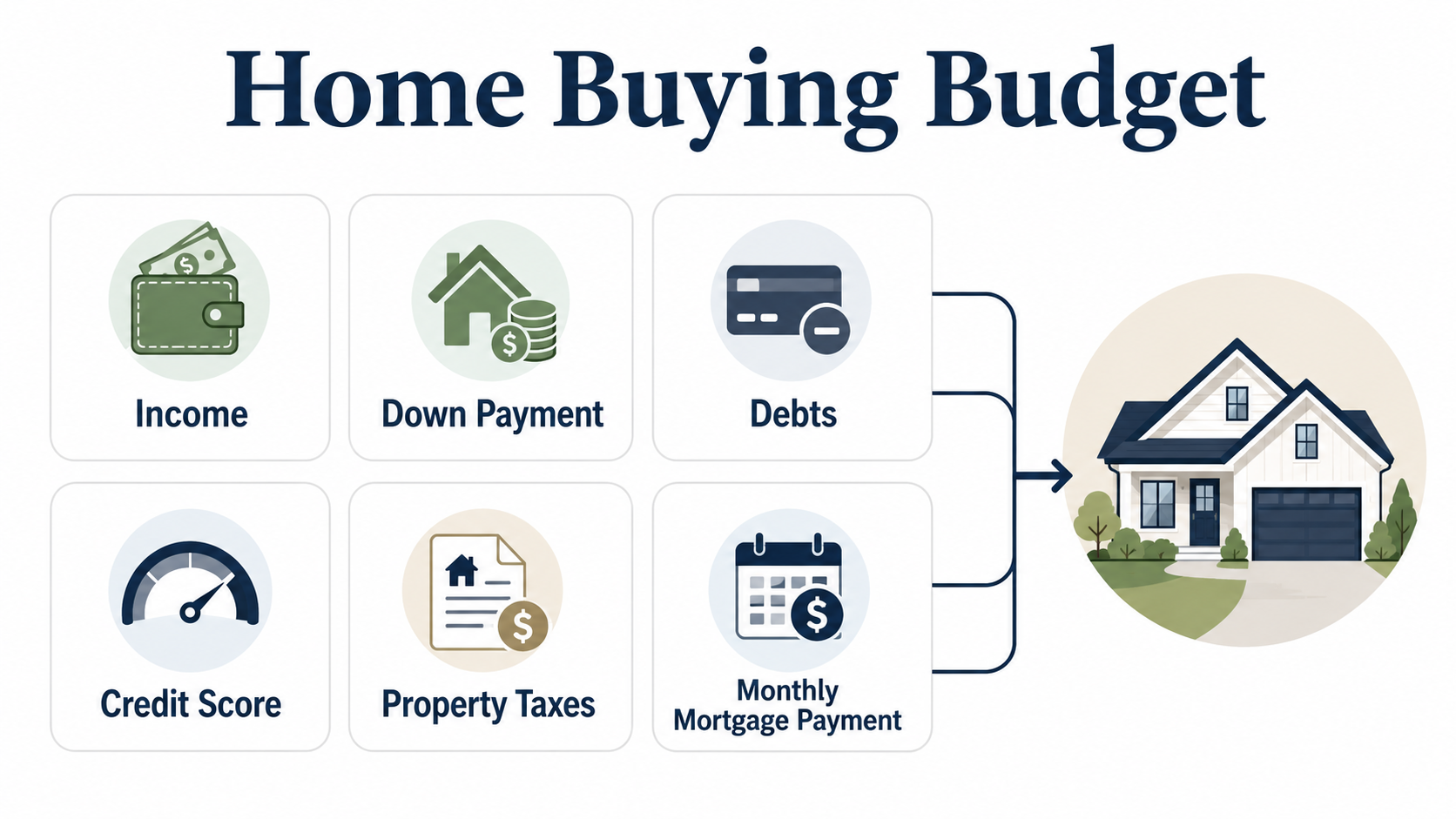
The goal is to estimate how much mortgage you may qualify for based on the information available at that time.
For first-time buyers, this step is useful because it gives you a clearer price range before you start looking at homes.
Why Pre-Approval Matters Before House Hunting
Many buyers start by asking:
“How much is this house?”
But the better question is:
“Can I comfortably afford this home based on my income, debts, down payment, and monthly budget?”
A pre-approval helps you avoid wasting time on homes that may not fit your real financial situation.
It can also help you:
- understand your estimated purchase budget
- know your possible monthly payment range
- identify issues early
- prepare your documents
- avoid surprises after making an offer
- shop with more confidence
CMHC recommends that buyers understand what they can afford and get mortgage pre-approval before starting their home search. CMHC recommendations
Pre-Approval Is Not Final Approval
This is one of the biggest misunderstandings among buyers.
A pre-approval does not mean the lender has fully approved the mortgage for a specific property.
Final approval usually happens after you have an accepted offer and the lender reviews the full file, including the property details.
The lender may still need to review:
- the signed purchase agreement
- MLS listing
- property type and condition
- appraisal, if required
- updated income documents
- down payment verification
- credit status
- lawyer and closing details
So even if you are pre-approved, you should avoid making major financial changes before closing.
What Documents May Be Needed for Pre-Approval?
The exact documents can vary depending on your situation, but most buyers should be ready to provide basic financial information.
Common documents may include:
Category | Examples |
|---|---|
Identification | Government-issued ID |
Income | Job letter, recent pay stubs, T4S, Notice of Assessment |
Down payment | Bank statements, investment statements, gift letter, if applicable |
Debts | Credit cards, car loans, lines of credit, student loans |
Property details | Usually needed after you make an offer |
CMHC notes that mortgage pre-approval may involve details about your job, salary, bank accounts, financial assets, loans, debts, down payment, and closing cost funds. Are you ready to buy a home?
Do Not Forget Closing Costs
Your down payment is not your only cost.
Many first-time buyers focus only on the down payment and forget that closing costs may also be needed.
Closing costs can include:
- land transfer tax
- lawyer fees
- title insurance
- appraisal fee, if required
- home inspection, if applicable
- property tax adjustments
- moving costs
CMHC notes that buyers should have sufficient funds to cover closing costs, which are often estimated at 1.5% to 4% of the purchase price.
For example, if you are buying a $600,000 home, closing costs could be a meaningful extra amount on top of your down payment.
That is why your budget should include both:
Down payment + closing costs
Not just the down payment.
Common Mistakes Buyers Make Before Pre-Approval
Here are some common mistakes first-time buyers should avoid:
1. Looking at homes before knowing their real budget
Online calculators can be helpful, but they do not replace a proper review of your income, debts, credit, and down payment.
2. Assuming pre-approval means guaranteed approval
Pre-approval is helpful, but final approval depends on the complete file and the property.
3. Forgetting about monthly comfort
Just because you may qualify for a certain amount does not mean that the payment is comfortable for your lifestyle.
4. Taking on new debt before closing
A new car loan, higher credit card balance, or new financing can affect your mortgage approval.
5. Not preparing documents early
Missing documents can slow down the process, especially when there is a financing condition deadline.
Simple Example
Let’s say a buyer wants to purchase a home in Ontario.
They have:
- stable employment income
- some savings for down payment
- one car payment
- credit card balances
- family expenses
- a target purchase price in mind
Without pre-approval, they may guess their budget based only on income.
But a lender will look at the full picture, including income, debt obligations, credit, down payment, property taxes, heating costs, condo fees if applicable, and qualifying rate.
That is why two buyers with the same income may not qualify for the same mortgage amount.
The details matter.
When Should You Get Pre-Approved?
Ideally, you should get pre-approved before you start serious house hunting.
A good time is when:
- You are planning to buy within the next few months
- You want to know your realistic price range
- You are starting to speak with a realtor
- You are comparing rent vs buying
- You want to prepare your documents early
- You want to understand whether debts or credit may affect your approval
Even if you are not ready to buy immediately, an early review can help you know what to fix or prepare.
Final Thoughts
Mortgage pre-approval is not just about impressing a realtor or seller.
It is about protecting your budget.
Before you fall in love with a home, you should know whether the numbers make sense for your income, debts, down payment, and monthly budget.
A proper pre-approval can help you shop with more confidence, avoid unrealistic expectations, and prepare for the mortgage process before making an offer.
Planning to buy your first home in Ontario?
Before you start house hunting, it is better to understand your real affordability.
You can contact me to review your mortgage options and prepare for the buying process.
Amandeep Singh Bhatia
Mortgage Agent Level 1
Mob: +1 647-229-9477
Email: asbhatia@akal.ca
AKAL Mortgages Inc.
Lic #10845
Independently owned and operated.

Home Equity Loan Ontario: How It Works
July 08, 2026

Home Equity Loan Ontario: How It Works for Homeowners
If you own a home in Ontario, you may have built equity without even thinking about it. A home equity loan Ontario homeowners consider is a way to borrow money using the value already built in the home. This can be useful for renovations, debt consolidation, major expenses, or other financial needs. But before using your home as security, it is important to understand how home equity borrowing works.
What Is a Home Equity Loan?
A home equity loan lets you borrow against the equity in your property. Home equity is the difference between your home’s current value and the mortgage balance you still owe.
For example, if your home is worth $700,000 and your mortgage balance is $450,000, your equity is about $250,000. That does not mean you can borrow the full $250,000. Lenders still look at your income, credit, debts, property value, and overall risk.
The Financial Consumer Agency of Canada explains that borrowing against home equity means using the value built in your home to access credit or a loan. You can read more about this directly from the Government of Canada here: Borrowing against home equity.
A home equity loan is usually paid as one lump sum. You then repay it over time with interest. Since the loan is secured by your home, the lender has more protection than with a credit card or unsecured personal loan.
How Much Can You Borrow?
In many cases, lenders may allow borrowing up to a certain percentage of the home’s value, after subtracting your current mortgage balance.
Here is a simple example:
- Estimated home value: $700,000
- 80% of home value: $560,000
- Current mortgage balance: $450,000
- Possible available equity: $110,000
This is only a rough example. The final amount depends on lender rules, appraisal value, income, debts, credit history, and the type of product selected.
The Government of Canada explains that when borrowing against home equity, you may generally borrow up to 80% of the appraised value of your home, minus the balance of your mortgage. This limit can vary depending on the product and lender rules. You can review the official explanation here: Borrowing against home equity.
Home Equity Loan vs HELOC
A home equity loan and a HELOC are not exactly the same.
A home equity loan usually gives you a lump sum. This may work better when you know the exact amount you need, such as a fixed renovation budget or a debt consolidation plan.
A HELOC, which stands for home equity line of credit, works more like a revolving line of credit. You can borrow, repay, and borrow again, up to the approved limit. This can be useful for ongoing or uncertain costs, but the rate is often variable, which means payments can change.
The Financial Consumer Agency of Canada explains that a HELOC lets you borrow against available equity in your home, but it is different from a home equity loan. You can read the official Government of Canada explanation here: Home equity lines of credit.
Common Reasons Ontario Homeowners Use Home Equity
Ontario homeowners may consider a home equity loan for different reasons:
- Renovating a kitchen, bathroom, basement, or rental space
- Consolidating high-interest credit cards or loans
- Paying for major family expenses
- Helping with investment property down payment planning
- Creating financial breathing room during a difficult period
The key point is this: the money should have a clear purpose. Borrowing against your home without a plan can create long-term pressure.
What Lenders Usually Review
When you apply for a home equity loan Ontario lenders may review several parts of your financial picture, including:
- Current mortgage balance
- Estimated property value
- Income documents
- Employment stability
- Credit score and credit history
- Monthly debts
- Property taxes and heating costs
- Overall affordability
If the file is stronger, the borrower may have access to better options. If there are credit issues, high debts, or hard-to-prove income, the options may be more limited.
In some situations, borrowers may also need to qualify under the mortgage stress test. The Financial Consumer Agency of Canada explains that federally regulated lenders, such as banks, require borrowers to pass a stress test when getting a mortgage. You can read more here: Preparing to get a mortgage.
Risks to Understand
A home equity loan can be useful, but it is not free money. Your home is used as security. If payments are not made, the lender can take action.
You should also consider setup costs, legal fees, appraisal requirements, interest rate, payment amount, and how the new debt affects your monthly budget.
Before moving forward, ask yourself:
Can I afford the new payment comfortably?Is this solving a real financial problem?Am I using the money for a smart reason?Have I compared refinance, HELOC, second mortgage, and debt consolidation options?
In Ontario, mortgage professionals are required to disclose material risks of a mortgage in writing. FSRA explains this on its consumer page about working with a mortgage professional. You can review it here: Working with a Mortgage Professional.
Is a Home Equity Loan Right for You?
A home equity loan Ontario homeowners use can make sense when there is enough equity, stable income, and a clear repayment plan. It may help with renovations, debt consolidation, or large planned expenses.
But the right option depends on your full situation. Sometimes a refinance may be better. Sometimes a HELOC may be more flexible. Sometimes the better answer is to wait, reduce debts, or review the budget first.
Before using your home equity, compare the numbers carefully. The goal is not just to access money. The goal is to make a decision that protects your home, your cash flow, and your long-term financial stability.
Sources and Helpful References
Mortgage Renewal vs Refinance in Ontario: Which Option Makes Sense?
July 08, 2026
Mortgage Renewal vs Refinance in Ontario: Which Option Makes Sense?
When your mortgage term is coming to an end, understanding mortgage renewal vs refinance Ontario options can help you avoid signing the wrong offer.
For many homeowners, the easiest thing is to accept the renewal letter from the current lender and move on.
But renewal time is one of the most important moments in your mortgage journey. It is a chance to review your rate, payment, lender, mortgage structure, and long-term financial plan.
Sometimes a simple renewal is enough. Other times, refinancing may make more sense.
This guide explains mortgage renewal vs refinance Ontario homeowners should understand before making a decision.
What Is a Mortgage Renewal?
A mortgage renewal happens when your current mortgage term ends.
For example, you may have a 5-year fixed mortgage. At the end of those 5 years, the mortgage balance is still not fully paid off because your amortization may be 25 or 30 years. So you need to renew the mortgage for a new term.
At renewal, you usually choose:
- A new interest rate
- A new term length
- Fixed or variable rate
- Payment frequency
- Whether to stay with the same lender or move to another lender
In most cases, the mortgage amount does not increase. You are simply continuing your existing mortgage with updated terms.
What Is Mortgage Refinancing?
Mortgage refinancing means replacing your current mortgage with a new mortgage.
The biggest difference is this:
With refinancing, you may be changing the actual mortgage amount, not just the rate or term.
Homeowners may refinance to:
- Access equity from the home
- Consolidate high-interest debt
- Pay for renovations
- Help with major family expenses
- Change the amortization
- Move from one mortgage structure to another
In Canada, refinancing is commonly limited to up to 80% of the property value, subject to lender approval, income, credit, property value, and other qualification requirements.
For example:
If your home is worth $700,000, then 80% of the value is $560,000.
If your current mortgage balance is $420,000, the maximum additional equity available may be around $140,000 before costs and approval conditions.
That does not mean everyone automatically qualifies. The lender still has to review income, debt, credit, property details, and overall risk.
Simple Difference Between Renewal and Refinance
Think of it this way:
When comparing mortgage renewal vs refinance Ontario options, the main difference is whether you are simply continuing your mortgage or changing the mortgage amount and structure.
Here is a simple comparison:
Factor | Mortgage Renewal | Mortgage Refinance |
|---|---|---|
When it usually happens | At the end of your mortgage term | During the term or at renewal |
Mortgage amount | Usually stays the same | Can increase |
Access home equity | Usually no | Yes, if qualified |
Penalty | Usually no penalty at maturity | Possible penalty if done mid-term |
Appraisal | Usually not required | Often required |
Legal work | Usually limited | Usually required |
Full income review | Sometimes, especially if switching lenders | Yes |
Best for | Getting a better rate and continuing the mortgage | Accessing equity or restructuring debt |
When a Mortgage Renewal May Make Sense
A renewal may be the better option when your mortgage is working fine and you do not need extra money from your home.
Renewal may make sense if:
- You do not need to borrow more money
- Your current mortgage balance is manageable
- You want to keep paying down the mortgage
- Your income or employment situation has changed and refinancing may be harder
- You are close to maturity and want to avoid unnecessary costs
- You simply want to compare rates and choose a better term
But do not assume your lender’s first renewal offer is the best offer.
The Financial Consumer Agency of Canada says homeowners may be able to negotiate a lower rate than the rate shown in the renewal letter, and competing offers can help during negotiation.
That is why renewal should not be treated like automatic paperwork. It should be reviewed.
When Mortgage Refinancing May Make Sense
Refinancing may make sense when you need to use the equity in your home or change the structure of your mortgage.
Refinancing may be worth reviewing if:
- You have high-interest debt
- You want to complete renovations
- You need funds for a major life event
- You want to combine multiple debts into one payment
- You want to extend the amortization to improve monthly cash flow
- You want to restructure after separation, business changes, or family changes
- You want to move from a higher-rate mortgage into a better structure
For example, a homeowner may have credit card debt at a much higher interest rate than their mortgage rate.
In that case, refinancing may reduce monthly debt pressure.
But this has to be done carefully.
Moving unsecured debt into your mortgage may lower the payment, but it can also stretch the debt over a longer period. That may increase the total interest paid over time if there is no clear repayment plan.
Refinancing should not just be about lowering today’s payment. It should also make sense for the long term.
The Cost Side: Renewal vs Refinance
A regular renewal at the end of the term is usually simpler and may not involve the same costs as refinancing.
Refinancing can involve extra costs, such as:
- Prepayment penalty if breaking the mortgage early
- Legal fees
- Appraisal fee
- Discharge or registration fees
- Possible lender fees depending on the mortgage type
- New qualification review
The biggest cost to watch is the penalty.
If you break a fixed mortgage early, the lender may charge either three months’ interest or an Interest Rate Differential, depending on the mortgage contract. The exact calculation depends on the lender and mortgage terms.
Before refinancing, the penalty must be compared against the benefit.
A refinance is not automatically good just because the new payment looks lower.
You need to know:
- How much is the penalty?
- How much are the legal and appraisal costs?
- How much interest may be saved?
- How long will it take to recover the cost?
- Will the new mortgage increase total interest over time?
- Is this solving the real financial problem or only delaying it?
Renewal Time Can Be a Good Time to Refinance
Refinancing during the middle of a term can trigger a penalty.
But refinancing at renewal time may be cleaner because the existing term is ending.
That means renewal time can be a smart moment to review both options:
- Should you simply renew the mortgage?
- Should you refinance and restructure the mortgage?
For example, if your renewal is coming up and you also have high-interest debt, renovation plans, or cash flow pressure, it may be worth reviewing a refinance before signing the renewal.
Once you sign a new term, breaking it later may become more expensive.
Questions to Ask Before You Decide
Before choosing between mortgage renewal vs refinance Ontario solutions, it is important to look at your full financial picture, not just the interest rate.
1. Do I need extra money from my home?
If the answer is no, renewal may be enough.
If the answer is yes, refinancing may need to be reviewed.
2. Am I trying to lower my payment or reduce my total cost?
These are not always the same thing.
A lower payment can help cash flow, but it may cost more over time if the debt is stretched out longer.
3. How much time is left on my current term?
If your mortgage is close to maturity, waiting for renewal may be better.
If you are breaking the mortgage early, the penalty needs to be calculated first.
4. Has my income changed?
Refinancing requires qualification.
If your income has gone down, your job changed, or you became self-employed, refinancing may need more planning.
5. What is my home worth today?
Your available equity depends on the current property value, not the price you paid years ago.
A lender may require an appraisal to confirm the value.
6. What is my long-term plan?
If you plan to sell soon, take on new debt, renovate, or buy another property, your mortgage structure matters.
The lowest rate is not always the best mortgage if the terms do not fit your plan.
Common Mistake: Only Looking at the Interest Rate
Many homeowners focus only on the rate.
The rate is important, but it is not the full picture.
You should also review:
- Term length
- Fixed vs variable
- Prepayment options
- Penalty calculation
- Portability
- Payment flexibility
- Amortization
- Lender conditions
- Whether you may need equity later
A slightly lower rate may not help if the mortgage has restrictions that cost you more later.
Example: Renewal May Be Better
Let’s say your mortgage balance is $480,000.
Your term is ending next month.
You do not need extra money.
Your income is stable.
Your only goal is to get a competitive rate and keep paying down the mortgage.
In this case, a renewal or switch to another lender may be enough.
You may not need a refinance.
Example: Refinance May Be Better
Now let’s say your home is worth $800,000.
Your mortgage balance is $500,000.
You also have $45,000 in credit cards and personal loans.
Your monthly debt payments are becoming stressful.
In this case, refinancing may be worth reviewing because there may be enough equity in the home to consolidate debt.
But the numbers must be checked properly.
The question is not only, “Can I refinance?”
The better question is, “Does refinancing improve my full financial picture without creating a bigger long-term problem?”
Final Thoughts
Mortgage renewal and mortgage refinancing are not the same thing.
A renewal is usually about continuing your mortgage with new terms.
A refinance is about changing the mortgage structure, often to access equity or reorganize debt.
If your mortgage renewal is coming up, do not sign the first offer without reviewing your options.
And if you are thinking about refinancing, do not look only at the monthly payment. Look at the penalty, costs, qualification, long-term interest, and your overall financial goal.
The right answer depends on your numbers.
A mortgage review can help you compare both options clearly before you decide.
Thinking About Renewing or Refinancing?
If your mortgage is coming up for renewal, or you are wondering whether refinancing makes sense, I can help you review the numbers.
We can look at your current mortgage, estimated home value, income, debts, and goals to see which option may fit better.
A clear mortgage decision starts with clear numbers.

Stay Connected
Subscribe to our Newsletter and you'll stay up to date on rates that help you save thousands in interest.